A
Section – A:
Answer any Seven Questions out of Ten. Each Question Carries Two Marks (7×2=14)
The Master of Commerce (M.Com.) programme is designed to provide students with comprehensive knowledge of commerce, accounting, taxation, finance, and banking systems by integrating theoretical concepts with practical applications relevant to the contemporary business environment. The programme equips students with professional competencies required in accounting, taxation practice, financial analysis, banking operations, auditing, and regulatory compliance. It aims to develop analytical thinking, quantitative reasoning, and financial decision-making abilities to address complex business and economic challenges effectively. The curriculum also fosters research aptitude through exposure to research methodology, data analysis techniques, and academic writing, enabling students to undertake scholarly and industry-oriented research. Further, the programme inculcates high standards of ethics, corporate governance, sustainability, and legal compliance in financial and accounting practices. By enhancing employability in corporate, banking, taxation, and financial services sectors, the programme also encourages entrepreneurship, innovation, and lifelong professional development.
A candidate who has passed the B.Com./B.B.A./BMS Degree examination of this University or of any other University recognized as equivalent thereto and has secured not less than 50% of the marks in the aggregate in all the Commerce subjects of Business Education in all the years shall be eligible for admission to the course. In case of SC/ST/CAT-1 students and PWD Students, there will be relaxation of 5% in the minimum required percentage of marks.
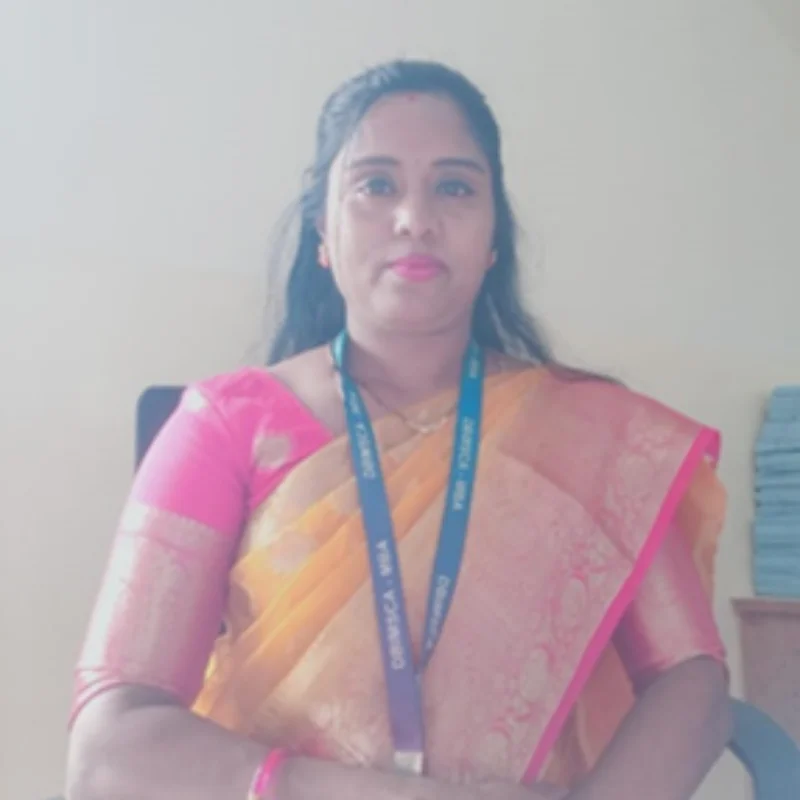
She is an experienced academic professional with 16 years of teaching experience and currently serves as the Head of the Department (HOD) – M.Com. She holds M.Com, MBA, and PGDBA qualifications, with expertise in Commerce, Finance, Accounting, Management, and Business Administration. She is currently pursuing her Ph.D. at Annamalai University, with a strong interest in research and emerging areas of Commerce and Management. She has published research papers in UGC-CARE listed journals and has successfully completed NPTEL/SWAYAM courses, reflecting her commitment to continuous learning and professional development. She has actively participated in numerous Faculty Development Programmes (FDPs), seminars, workshops, conferences, and training programmes, enhancing her knowledge of contemporary teaching methods, technology, research, and higher education practices.

At DBIMSCA, we provide progressive and quality education.

Our M.Com program is designed to develop globally competent commerce professionals with analytical, managerial and research skills by imbibing moral values to meet industry and academic challenges.

The student has to undergo a certification course in any MOOC platform such as SWAYAM, NPTEL, AICTE, CEC of 8 Weeks / 12 Weeks / 16 Weeks Programme at the beginning of the 1st semester, submit the certificate at the end of 2nd Semester examinations, which is compulsory.

Certification Programme: The student must undergo a Skill-based Training Certification Course from FKCCI / MSME / SME / KSSIC / KASSIA / BCIC and submit the certificate within 3rd Semester examinations to the Head of the department of PG Studies. The allotment of the skill-based training program is at the beginning of the 3rd semester, and proper time allocation in the college timetable.
Demonstrate advanced knowledge and application of accounting and financial principles in complex business scenarios.
Apply advanced research methodologies to conduct rigorous business research and analyze economic trends.
Utilize business analytics tools and techniques to interpret data and support strategic business decisions.
Understand and apply concepts of international business and global trade to manage cross-border operations.
Include professional tools, development workflows, teamwork, project documentation and basic agile practices.
Develop the ability to communicate complex business concepts and present research findings clearly and effectively
Demonstrate a commitment to ethical practices and corporate governance in business operations.
Develop strategic leadership and management skills to lead organizations and drive business success.
Demonstrate adaptability to evolving business environments and a commitment to continuous learning and professional development.
Exhibit the ability to work effectively in teams and contribute to collaborative projects in diverse business environments.
The medium of instruction shall be English. However, a candidate will be permitted to write the examination either in English or in Kannada.
A candidate shall register for all the papers of a semester when he appears for the examination of that semester for the first time.
There shall be a University examination at the end of each semester. The maximum marks for the university examination in each paper shall be 100 as shown below: For subjects having practical examination (Advanced Research Methodology) theory examination will remain for 70 Marks, but in the place of Internal Assessment, Practical examination will be conducted, the marks allotment is as follows: End Semester Practical Examination 10 Marks Record 10 Marks
Each semester will normally have six (Hardcore) and one (soft core) paper and each shall be for 100 marks.
The composition of theory and internal assessment marks for each paper will be 70 and 30 respectively.
|
Scheme of Course Examination: Particulars |
Duration | Internal Assessment | Theory Examination | Total Marks |
|---|---|---|---|---|
| Subject without M.Com Practicals |
2 years, (4 Semesters) |
30 | 70 | 100 |
Answer any Seven Questions out of Ten. Each Question Carries Two Marks (7×2=14)
Answer any Four Questions out of Six. Each Question Carries Five Marks (4×5=20)
Answer any Two Questions out of Four. Each Question Carries Twelve Marks (2×12=24)
Skill-based Question (1×12=12)

A Centre of Excellence (CoE) for M.Com is a dedicated academic platform within the M.Com department that focuses on advanced learning, industry exposure, research, innovation, skill development, and professional excellence in Commerce, Finance, Accounting, Taxation, Banking and related areas.
In simple words, M.Com CoE means a special centre or initiative that makes the M.Com department a centre for high-quality learning, practical skills, research and industry-oriented education.
The Master of Commerce (M.Com.) programme is designed to provide students with comprehensive knowledge of commerce, accounting, taxation, finance, and banking systems by integrating theoretical concepts with practical applications relevant to the contemporary business environment. The programme equips students with professional competencies required in accounting, taxation practice, financial analysis, banking operations, auditing, and regulatory compliance. It aims to develop analytical thinking, quantitative reasoning, and financial decision-making abilities to address complex business and economic challenges effectively. The curriculum also fosters research aptitude through exposure to research methodology, data analysis techniques, and academic writing, enabling students to undertake scholarly and industry-oriented research. Further, the programme inculcates high standards of ethics, corporate governance, sustainability, and legal compliance in financial and accounting practices. By enhancing employability in corporate, banking, taxation, and financial services sectors, the programme also encourages entrepreneurship, innovation, and lifelong professional development.
A candidate who has passed the B.Com./B.B.A./BMS Degree examination of this University or of any other University recognized as equivalent thereto and has secured not less than 50% of the marks in the aggregate in all the Commerce subjects of Business Education in all the years shall be eligible for admission to the course. In case of SC/ST/CAT-1 students and PWD Students, there will be relaxation of 5% in the minimum required percentage of marks.
At DBIMSCA, we provide progressive and quality education.
Our M.Com program is designed to develop globally competent commerce professionals with analytical, managerial and research skills by imbibing moral values to meet industry and academic challenges.
The student has to undergo a certification course in any MOOC platform such as SWAYAM, NPTEL, AICTE, CEC of 8 Weeks / 12 Weeks / 16 Weeks Programme at the beginning of the 1st semester, submit the certificate at the end of 2nd Semester examinations, which is compulsory.
Certification Programme: The student must undergo a Skill-based Training Certification Course from FKCCI / MSME / SME / KSSIC / KASSIA / BCIC and submit the certificate within 3rd Semester examinations to the Head of the department of PG Studies. The allotment of the skill-based training program is at the beginning of the 3rd semester, and proper time allocation in the college timetable.
Demonstrate advanced knowledge and application of accounting and financial principles in complex business scenarios.
Apply advanced research methodologies to conduct rigorous business research and analyze economic trends.
Utilize business analytics tools and techniques to interpret data and support strategic business decisions.
Understand and apply concepts of international business and global trade to manage cross-border operations.
Include professional tools, development workflows, teamwork, project documentation and basic agile practices.
Develop the ability to communicate complex business concepts and present research findings clearly and effectively
Demonstrate a commitment to ethical practices and corporate governance in business operations.
Develop strategic leadership and management skills to lead organizations and drive business success.
Demonstrate adaptability to evolving business environments and a commitment to continuous learning and professional development.
Exhibit the ability to work effectively in teams and contribute to collaborative projects in diverse business environments.
The medium of instruction shall be English. However, a candidate will be permitted to write the examination either in English or in Kannada.
A candidate shall register for all the papers of a semester when he appears for the examination of that semester for the first time.
There shall be a University examination at the end of each semester. The maximum marks for the university examination in each paper shall be 100 as shown below: For subjects having practical examination (Advanced Research Methodology) theory examination will remain for 70 Marks, but in the place of Internal Assessment, Practical examination will be conducted, the marks allotment is as follows: End Semester Practical Examination 10 Marks Record 10 Marks
Each semester will normally have six (Hardcore) and one (soft core) paper and each shall be for 100 marks.
The composition of theory and internal assessment marks for each paper will be 70 and 30 respectively.
|
Scheme of Course Examination: Particulars |
Duration | Internal Assessment | Theory Examination | Total Marks |
|---|---|---|---|---|
| Subject without M.Com Practicals |
2 years, (4 Semesters) |
30 | 70 | 100 |
Answer any Seven Questions out of Ten. Each Question Carries Two Marks (7×2=14)
Answer any Four Questions out of Six. Each Question Carries Five Marks (4×5=20)
Answer any Two Questions out of Four. Each Question Carries Twelve Marks (2×12=24)
Skill-based Question (1×12=12)
A Centre of Excellence (CoE) for M.Com is a dedicated academic platform within the M.Com department that focuses on advanced learning, industry exposure, research, innovation, skill development, and professional excellence in Commerce, Finance, Accounting, Taxation, Banking and related areas.
In simple words, M.Com CoE means a special centre or initiative that makes the M.Com department a centre for high-quality learning, practical skills, research and industry-oriented education.
She is an experienced academic professional with 16 years of teaching experience and currently serves as the Head of the Department (HOD) – M.Com. She holds M.Com, MBA, and PGDBA qualifications, with expertise in Commerce, Finance, Accounting, Management, and Business Administration. She is currently pursuing her Ph.D. at Annamalai University, with a strong interest in research and emerging areas of Commerce and Management. She has published research papers in UGC-CARE listed journals and has successfully completed NPTEL/SWAYAM courses, reflecting her commitment to continuous learning and professional development. She has actively participated in numerous Faculty Development Programmes (FDPs), seminars, workshops, conferences, and training programmes, enhancing her knowledge of contemporary teaching methods, technology, research, and higher education practices.